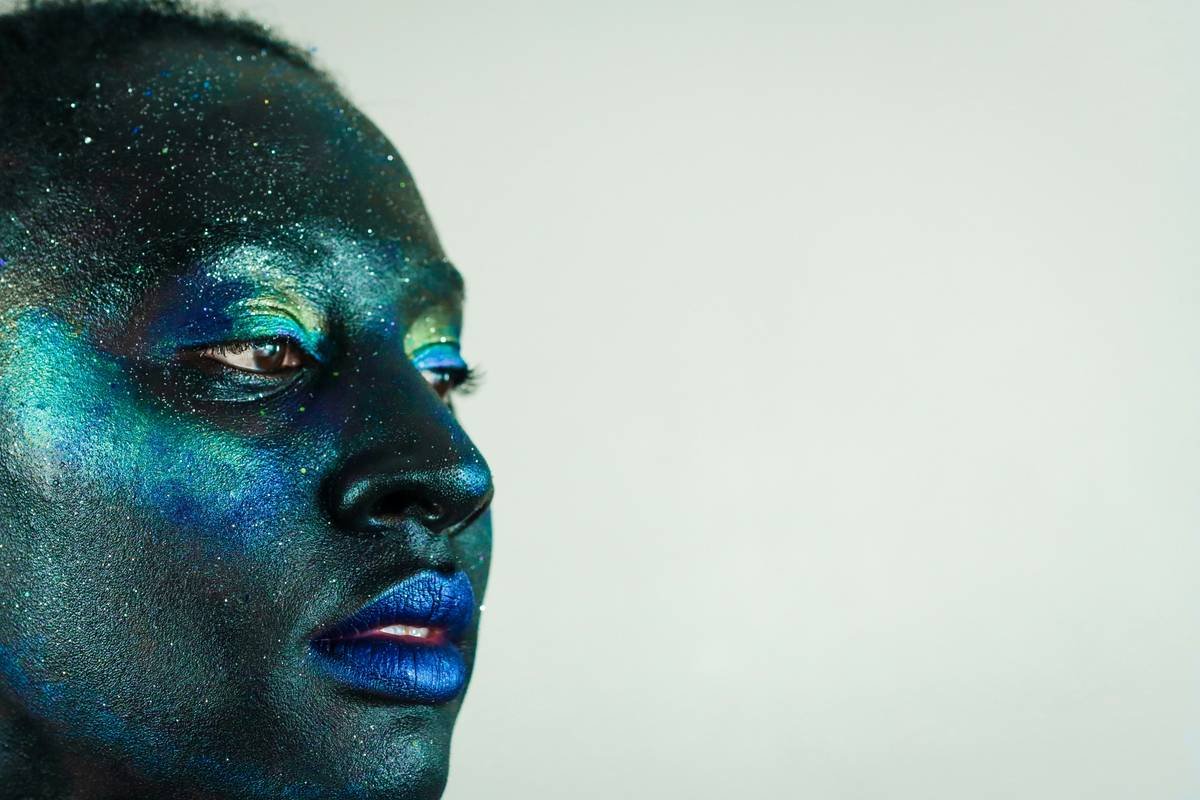
Creating believable alien anatomy or cybernetic warriors with standard beauty makeup? You’ll fail—spectacularly. Sci-fi audiences crave anatomical plausibility, not glitter and contouring. The stakes are high: one poorly blended edge, one unrealistic texture, and your character collapses into cheap cosplay. But there’s a better way—grounded in biology, sculpted with purpose, and finished with obsessive realism.
Why Traditional SFX Methods Fall Short in Sci-Fi
Latex appliances and basic scar wax were built for horror—not speculative evolution. They lack the structural fidelity needed for non-human physiology. Think about it: an alien species wouldn’t have pores like humans, nor would a biomechanical soldier sweat through silicone seams. Yet 90% of indie sci-fi SFX still layers human-centric products onto non-human forms.
And that’s the core failure. You’re applying terrestrial logic to extraterrestrial design. The result? Creatures that feel like humans in masks—not beings from another world.
Special Effects Makeup for Sci-Fi: A Step-by-Step Framework
Start With Xenobiology, Not Sculpey
Before touching clay, define your creature’s evolutionary pressures. Does it live in methane oceans? High-gravity deserts? Its skin texture, joint structure, and even color palette must reflect environmental adaptation—not just “cool aesthetics.”
Material Layering Over Monolithic Appliances
Ditch single-piece prosthetics. Instead, build modular systems: foam latex for musculature, gelatin gels for translucent membranes, and flocking for organic fuzz. Layer them like ecosystems, not costumes.
Light Interaction Is Your Secret Weapon
Sci-fi lighting is harsh—LEDs, fluorescents, stark shadows. Test your makeup under the same conditions. Matte finishes disappear; strategic sheen sells dimensionality. Use iridescent powders sparingly on ridges to simulate chitin or synthetic armor.
| Technique | Best For | Cost Range (USD) | Realism Rating (1–10) |
|---|---|---|---|
| Foam Latex Appliances | Large facial structures (jaws, brows) | $150–$400 | 7 |
| Gelatin Gel Casting | Translucent organs, bio-luminescent patches | $40–$120 | 9 |
| 3D-Printed Resin Molds + Silicone Skin | High-detail exoskeletons, cybernetics | $300–$800+ | 10 |
| Hand-Painted Flocking | Textured hide, fungal growths | $20–$60 | 8 |

The Industry Secret: Borrow From Paleontology, Not Hollywood
Top-tier sci-fi makeup artists don’t study movies—they study fossils and deep-sea specimens. Why? Because nature already solved problems you’re faking: pressure-resistant dermal layers, bioluminescent signaling, symbiotic skin flora. One Oscar-winning artist I know keeps a shelf of trilobite casts and anglerfish specimens next to his mold room. He reverse-engineers real biological solutions into fictional anatomy. That’s how you get creatures that feel *lived-in*, not just painted-on. The math is simple: authenticity beats spectacle every time.
FAQ
How long does special effects makeup for sci-fi take to apply?
Full alien or cyborg applications typically require 3–6 hours, depending on appliance complexity and paint detail. Modular builds speed this up.
Can beginners do sci-fi SFX makeup?
Start small—focus on one feature (e.g., textured forehead ridges) using gelatin or silicone. Avoid full-head builds until you master adhesion and color matching.
What glue works best for sci-fi prosthetics?
Medical-grade silicone adhesives (like Telesis 5) outperform spirit gum for non-porous materials. They flex with movement and resist stage lighting heat.